


Content :
- What is Chemical Transportation ?
- Importance in Supply Chain
- Types of Chemical Transport Methods
- Road Transport
- Rail Transport
- Sea Transport (Chemical Tankers)
- Safety Measures in Chemical Transportation
- Step-by-Step Transportation Process
- Challenges in Chemical Logistics
- Cost of Chemical Transportation
- How to Choose a Chemical Transport Company
- Future Trends in Chemical Logistics
- FAQs
Transporting industrial chemicals is one of the most critical and sensitive operations in global logistics. With rising demand across industries like pharmaceuticals, manufacturing, and oil & gas, the role of chemical tankers, chemical transporters, and chemical transporter companies has become more important than ever.
This guide explains how chemical transportation works, safety standards, transport methods, and how to choose the right logistics partner.
What is Chemical Transportation ?
Chemical transportation refers to the safe and efficient movement of hazardous chemical transports and non-hazardous chemicals transports from production units to end users. It involves specialized infrastructure, trained personnel, and strict compliance with global safety regulations.
Modern chemical transporters use advanced systems such as GPS tracking, temperature monitoring, and automated handling to ensure secure delivery.
Importance of Chemical Transportation in the Supply Chain
Chemical tankers are specially designed vehicles or vessels used to transport liquid chemicals in bulk. These tankers are built with corrosion-resistant materials and safety features to handle volatile substances.
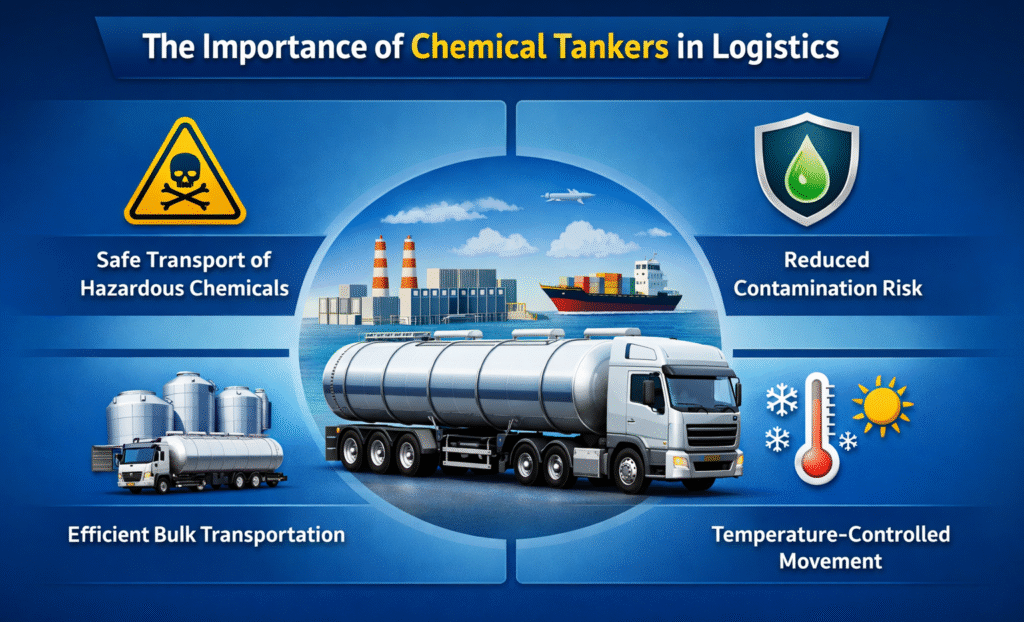
Key benefits of chemical tankers include :
- Safe transport of hazardous chemicals
- Reduced contamination risk
- Efficient bulk transportation
- Temperature-controlled movement
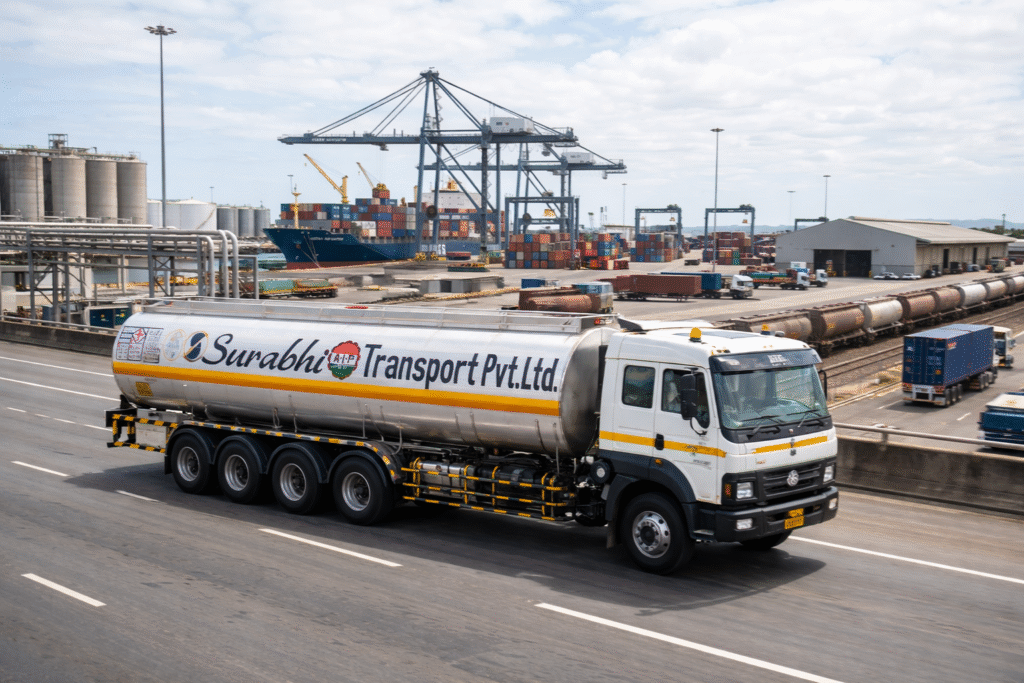
Industries rely heavily on chemical transporter companies that operate advanced tanker fleets to maintain supply chain continuity.
Need the Right Chemical Tanker for Your Business ?
Types of Chemical Transport Methods
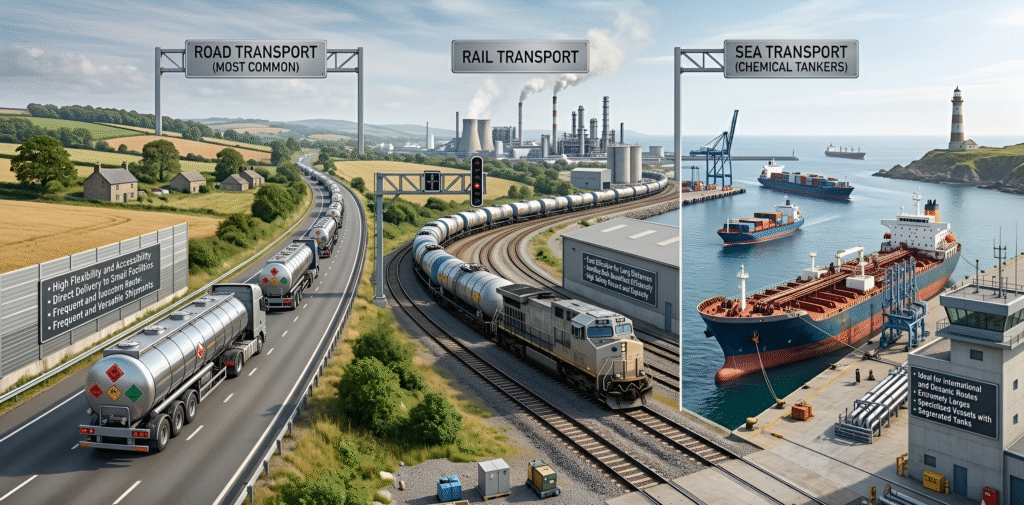
Different transport methods are used depending on the chemical type and distance :
1. Road Transport (Most Common)
Road-based chemical transporters are widely used for short to medium distances. Tanker trucks are equipped with safety valves, pressure control systems, and emergency shut-off features.
2. Rail Transport
Rail transport is ideal for bulk quantities and long-distance movement. It offers cost efficiency and reduced environmental impact compared to road transport.
3. Sea Transport (Chemical Tankers)
Marine chemical tankers are used for international shipping. These vessels are designed with multiple compartments to carry different chemicals safely.
Safety Measures in Chemical Transportation
Safety is the backbone of chemical logistics. Reliable chemical transporter companies follow strict guidelines to prevent accidents and environmental hazards.
Key Safety Practices :
- Use of certified tanker equipment
- Proper labeling and documentation
- Driver training for hazardous material handling
- Emergency response systems
- Regular inspection and maintenance
Compliance with global standards like ADR, IMDG, and IATA ensures that chemical transporters operate within legal frameworks.
Step-by-Step Chemical Transportation Process
Understanding the process helps businesses choose the right logistics partner.
- Chemical Classification – Identifying hazardous properties
- Packaging & Storage – Using approved containers or tankers
- Transport Planning – Selecting the safest route
- Loading & Handling – Ensuring leak-proof transfer
- Real-Time Monitoring – Tracking shipment conditions
- Delivery & Unloading – Safe handover at destination
Professional chemical transporter companies follow this structured approach to ensure safety and efficiency.
Challenges in Chemical Logistics
Despite technological advancements, the industry faces several challenges :
- Strict regulatory compliance
- High transportation costs
- Risk of leaks and contamination
- Infrastructure limitations
Experienced chemical transporters overcome these challenges through advanced fleet management and safety protocols.
Cost of Chemical Transportation
The cost of transporting chemicals depends on multiple factors :
- Type of chemical (hazardous or non-hazardous)
- Distance and route
- Mode of transport (road, rail, sea)
- Safety requirements and insurance
Choosing the right chemical transporter companies can help optimize costs while maintaining safety standards.
Want to Optimize Your Chemical Transport Costs?
How to Choose a Chemical Transport Company
Selecting the right logistics partner is crucial for business success.
Key Factors to Consider:
- Experience in handling hazardous chemicals
- Availability of modern chemical tankers
- Compliance with safety regulations
- Real-time tracking and monitoring systems
- Strong reputation and client reviews
Reliable chemical transporters ensure timely delivery, reduce risks, and maintain product quality.
Future Trends in Chemical Logistics
The future of chemical logistics is driven by technology and sustainability.
Emerging trends include :
- IoT-enabled smart tankers
- AI-based route optimization
- Eco-friendly fuel alternatives
- Automation in loading and unloading
Leading chemical transporter companies are adopting these innovations to improve efficiency and safety.
Simplify Your Chemical Transportation Process?
Conclusion
Chemical transportation plays a vital role in modern industrial supply chains. From advanced chemical tankers to highly trained chemical transporters, every element is designed to ensure safe and efficient delivery.
Businesses must partner with experienced chemical transporter companies that prioritize safety, compliance, and innovation. By understanding transportation methods, safety practices, and industry trends, companies can optimize their logistics operations and stay competitive.
FAQs
Chemical tankers are used to transport liquid chemicals safely in bulk, minimizing contamination and leakage risks.
They follow strict regulations, use advanced tanker systems, and implement real-time monitoring for safe transportation.
Cost depends on chemical type, distance, transport mode, and safety requirements.
They provide expertise, compliance, and reliable logistics solutions for hazardous and non-hazardous chemical.