



Hazardous Chemical Transporter in India : What to Know Before You Ship
Moving hazardous chemicals isn’t like moving any other freight. One wrong move — a poorly maintained tanker, an untrained driver, a badly planned route — and you’re not just risking a delayed shipment. You’re risking lives, the environment, and your company’s compliance record.
That’s why choosing the right Hazardous Chemical Transporter matters more than almost any other logistics decision a chemical business makes. In this guide, we’ll break down what hazardous chemical transportation actually involves, what separates a safe operator from a risky one, and what to look for before you hand over your next shipment.
We are Surabhi Group, and we’ve been in the logistics business since 1997, starting as Surabhi Transport Pvt. Ltd. to serve companies in paints, pharmaceuticals, inks, agrochemicals, tyres, adhesives, and other chemical sectors. Hazardous chemical transport is one of our core specialities, and everything below reflects how we actually operate — not generic industry theory.
What Is a Hazardous Chemical Transporter ?
A hazardous chemical transporter is a specialized logistics provider that moves corrosive, flammable, toxic, or reactive chemical substances using purpose-built tankers, trained drivers, and strict safety protocols. Unlike standard freight carriers, these transporters must follow regulatory compliance, emergency response planning, and vehicle-specific safety standards throughout every shipment.
This isn’t a service you outsource to just anyone with a truck. It requires specialized fleet infrastructure, documented safety systems, and teams who understand chemical behavior — not just driving routes.
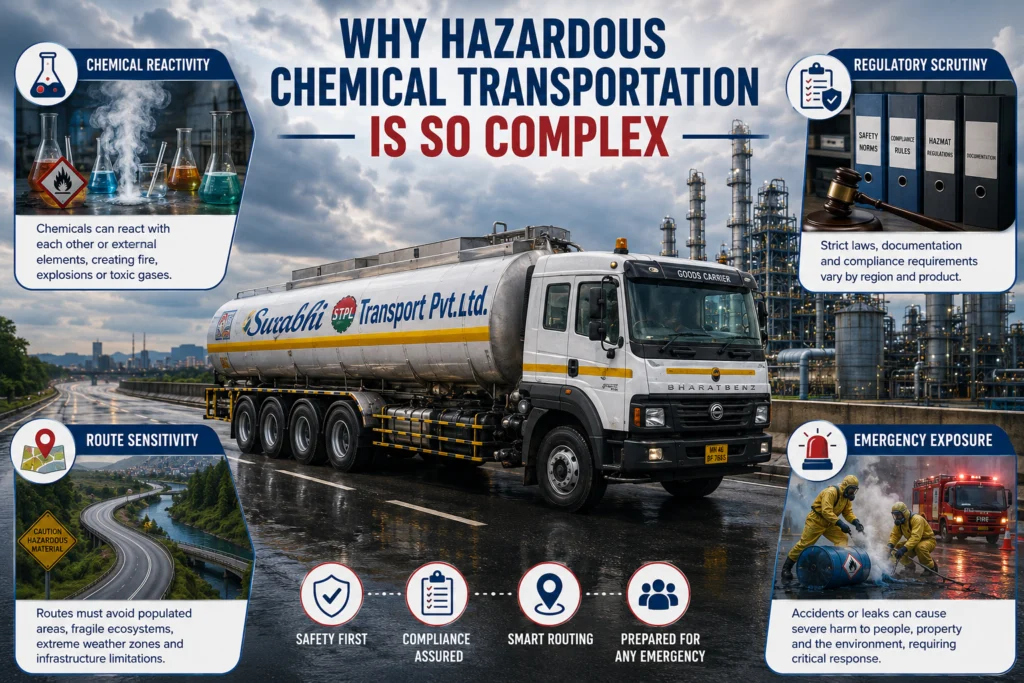
Why Hazardous Chemical Transportation Is So Complex ?
Chemical manufacturers, distributors, and industrial buyers face a real problem: hazardous materials are unforgiving of shortcuts. A few of the risks that make this category different from regular freight :
- Chemical reactivity — corrosive and flammable substances can react dangerously if contamination, leaks, or temperature swings occur mid-transit.
- Regulatory scrutiny — hazardous goods movement is closely regulated, and non-compliance can halt shipments or trigger penalties.
- Route sensitivity — not every road, bridge, or fuel stop is suitable for hazardous cargo.
- Emergency exposure — a breakdown or accident with hazardous chemicals demands immediate, trained response — not guesswork.
Why Hazardous Chemical Transportation Is So Complex ?
Chemical manufacturers, distributors, and industrial buyers face a real problem: hazardous materials are unforgiving of shortcuts. A few of the risks that make this category different from regular freight :
- Chemical reactivity — corrosive and flammable substances can react dangerously if contamination, leaks, or temperature swings occur mid-transit.
- Regulatory scrutiny — hazardous goods movement is closely regulated, and non-compliance can halt shipments or trigger penalties.
- Route sensitivity — not every road, bridge, or fuel stop is suitable for hazardous cargo.
- Emergency exposure — a breakdown or accident with hazardous chemicals demands immediate, trained response — not guesswork.
This is exactly where a specialized chemical tanker transport company earns its value. General transporters simply aren’t built for this level of risk management.
How We Handle Hazardous Chemical Transportation ?
At Surabhi Group, our approach to hazardous chemical logistics is built around three pillars: planning, equipment, and people.
1. Meticulous Route Planning
Before a tanker moves, our team maps out the safest, most efficient route — accounting for road conditions, traffic patterns, and emergency access points along the way.
2. Specialized Fleet & Equipment
Our fleet of dedicated hazardous chemical transport tankers is equipped with advanced safety features and GPS tracking, and every vehicle undergoes regular maintenance and inspection to stay in optimal operating condition.
3. Trained, Experienced Teams
Our drivers and support staff are trained specifically for hazardous cargo — including corrosive substances, flammable liquids, and toxic materials — so shipments are handled with the right precautions at every stage.
Benefits of Working With a Specialized Hazardous Chemical Transporter
| Benefit | Why It Matters |
|---|---|
| Reduced Safety Risk | Trained teams and dedicated equipment lower accident and leak risk. |
| Regulatory Compliance | Reduces the chance of shipment delays or penalties. |
| Real-Time Tracking | GPS-enabled tankers provide visibility over live shipment status. |
| Fewer Delivery Delays | Route planning reduces breakdowns and detours. |
| Long-Term Reliability | Established transporters have proven track records across industries. |
Industries We Serve
Our chemical logistics experience spans paints, pharmaceuticals, inks, agrochemicals, tyres, adhesives, and broader chemical manufacturing sectors. Whether it’s a recurring bulk shipment or a one-time hazardous transport project, the planning discipline stays the same.
Common Mistakes Businesses Make When Choosing a Chemical Transporter
- Choosing on price alone — the cheapest transporter is rarely the safest one for hazardous cargo.
- Skipping fleet verification — not checking whether vehicles are actually equipped and maintained for hazardous materials.
- Ignoring route history — assuming any transporter can safely navigate hazardous-goods-restricted routes.
- Overlooking emergency preparedness — failing to ask what happens if something goes wrong mid-transit.
A trustworthy hazardous chemical tanker transport partner should be able to answer all of these questions clearly, without hesitation.
Where We Operate ?
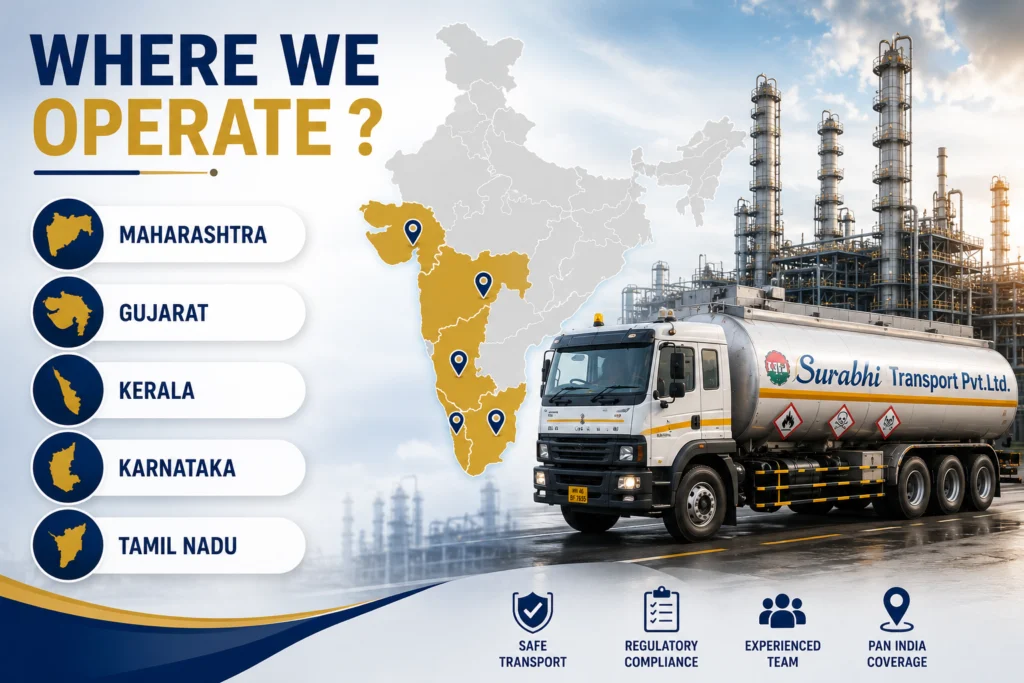
We currently serve key industrial hubs across :
- Maharashtra – Mumbai
- Gujarat – Bharuch, Hazira, Dahej, Kandla, Jamnagar, Vadodara
- Kerala – Kochi
- Karnataka – Mangalore
- Tamil Nadu – Chennai
This regional coverage lets us support both regular bulk lifting and time-sensitive hazardous shipments across major chemical manufacturing corridors.
Conclusion
Hazardous chemical transportation isn’t a task to hand off casually — it demands specialized fleets, trained personnel, and disciplined route planning. As a dedicated Hazardous Chemical Transporter, Surabhi Group has spent over two decades building the infrastructure and expertise to move hazardous materials safely, on time, and in full compliance.
- If you’re evaluating hazardous chemical transport services for your business, the right partner should offer more than a quote — they should offer a proven safety record.
Ready to move your hazardous chemicals safely? Contact Surabhi Group today at +91-22-4200-9000 or operations@surabhitransport.com to discuss your requirements.
A hazardous chemical transporter is a logistics company that specializes in safely moving corrosive, flammable, or toxic chemical materials using certified tankers, trained drivers, and strict safety protocols.
Costs vary based on chemical type, distance, tanker specifications, and regulatory requirements. It's best to request a direct quote based on your specific shipment details.
It requires specialized tankers, trained handling teams, strict route planning, and regulatory compliance — since hazardous materials carry higher safety and environmental risks than standard cargo.
Paints, pharmaceuticals, inks, agrochemicals, tyres, adhesives, and broader chemical manufacturing industries rely on hazardous chemical logistics for raw material and finished product movement.
Through GPS-tracked specialized tankers, regular vehicle maintenance and inspection, trained drivers, and carefully planned transport routes that account for road and emergency conditions.
Surabhi Group serves Mumbai, along with Bharuch, Hazira, Dahej, Kandla, Jamnagar, Vadodara in Gujarat, plus Kochi, Mangalore, and Chennai.