



Ammonia Tanker Transportation in India : Safety & Compliance Guide
Moving liquid ammonia across India isn’t like transporting ordinary industrial cargo. One mishandled tanker, one skipped safety check, or one poorly planned route can put entire communities at risk — which is exactly why ammonia tanker transportation in India is governed by some of the strictest hazardous material regulations in the country.
At Surabhi Group, we’ve spent years navigating this exact challenge — moving liquid ammonia safely across India’s busiest industrial corridors, from Gujarat’s chemical belt to the ports of the south. In this guide, we’re sharing what actually goes into safe, compliant, and efficient ammonia transportation in India — the standards, the risks, and the practical steps that separate a reliable transporter from a risky one.
What Is Ammonia Tanker Transportation ?
Ammonia tanker transportation is the specialized process of moving liquid or compressed ammonia gas by road using pressurized, insulated tankers designed specifically for hazardous chemicals. Because ammonia is toxic, corrosive, and reactive under pressure changes, this transport requires certified vehicles, trained drivers, and strict adherence to national safety codes — unlike standard bulk liquid haulage.
Ammonia is one of the most widely used industrial chemicals in India, powering fertilizer production, refrigeration systems, and chemical manufacturing. But its hazardous nature means every stage of transport — loading, transit, and unloading — carries real risk if not managed correctly.
How to Choose a Reliable Chemical Transporter Company : Step-by-Step ?
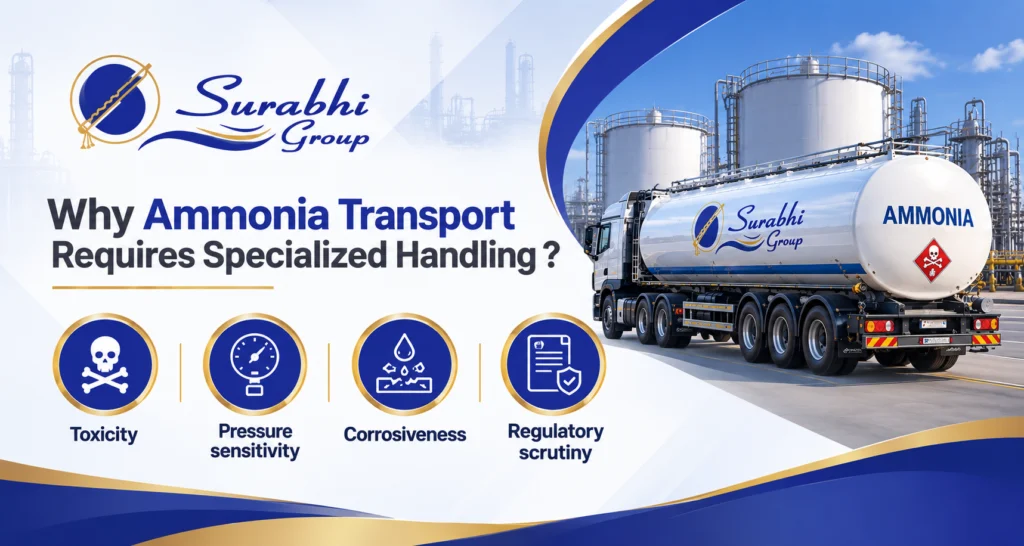
Ammonia isn’t just another chemical on a truck. Here’s what makes it uniquely demanding to transport :
- Toxicity — Even small leaks can cause respiratory harm to nearby people
- Pressure sensitivity — Requires tankers built to maintain specific pressure and temperature conditions
- Corrosiveness — Demands tankers made of compatible, corrosion-resistant materials
- Regulatory scrutiny — Falls under PESO (Petroleum and Explosives Safety Organisation) licensing and the Gas Cylinder Rules
This is why generic transport fleets aren’t equipped for this job — and why industries increasingly look for transporters with dedicated hazardous ammonia transportation experience.
The Real Risks of Ammonia Transportation in India
India has seen its share of ammonia-related transport incidents over the years — tanker leaks near residential zones, transit accidents on congested highways, and storage failures at transfer points. These aren’t rare edge cases; they’re reminders of what happens when safety protocols are treated as paperwork rather than practice.
Common risk points include :
- Overloading or improper filling of tankers
- Inadequately trained drivers unfamiliar with emergency procedures
- Poor route planning through densely populated or high-traffic zones
- Equipment fatigue from tankers that aren’t regularly inspected
- Delayed emergency response due to lack of onboard safety kits
Understanding these risks is the first step. Managing them systematically is what actually keeps people and cargo safe.
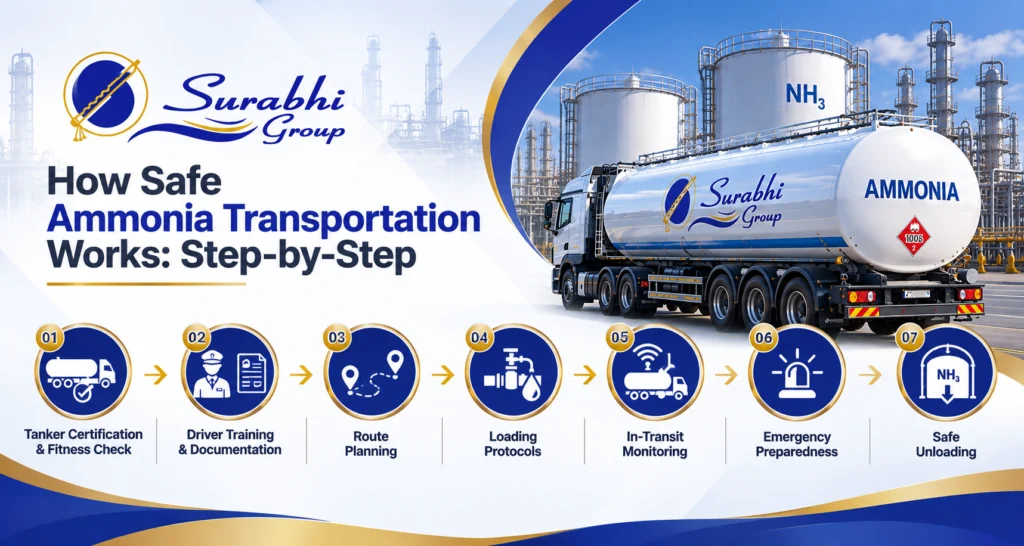
How Safe Ammonia Transportation Works: Step-by-Step ?
Step 1: Tanker Certification & Fitness Check
Every tanker must carry a valid PESO certificate confirming it’s fit to carry ammonia. This includes pressure testing, corrosion checks, and valve inspections before each major trip.
Step 2: Driver Training & Documentation
Drivers must be trained in hazardous material handling and carry a Transport Emergency (TREM) card with clear instructions for what to do in case of a leak, spill, or accident.
Step 3: Route Planning
Routes are mapped to avoid heavily populated areas, schools, and hospitals wherever possible, with pre-identified emergency stop points along the way.
Step 4: Loading Protocols
Loading is done under supervision, with pressure and quantity checks to prevent overfilling — one of the most common causes of transit leaks.
Step 5: In-Transit Monitoring
Modern ammonia transport increasingly uses GPS tracking and real-time monitoring to flag pressure anomalies or unplanned route deviations instantly.
Step 6: Emergency Preparedness
Every tanker carries a spill-response kit, protective gear, and direct contact numbers for local disaster management authorities.
Step 7: Safe Unloading
Unloading follows the same disciplined protocol as loading — controlled pressure release, trained personnel, and verification against dispatch documentation.
Regulatory Compliance: What the Law Requires
- What licenses are required for ammonia transportation in India?
Ammonia transporters need a valid PESO license for the tanker, driver certification for hazardous goods handling, a Transport Emergency Card (TREM), and compliance with the Gas Cylinder Rules under the Static and Mobile Pressure Vessels (SMPV) regulations.
Key compliance areas include:
| Red Flags | Green Flags |
|---|---|
| Vague answers about driver training | Documented, hazard-specific driver training |
| One generic tanker fleet for all chemicals | Specialised vehicles by chemical category |
| No mention of compliance documentation | Clear TREM cards, labelling, and regulatory records |
| No shipment tracking offered | Real-time GPS tracking as standard |
| Pricing far below market average | Transparent pricing reflecting safety investment |
| Limited or unclear network coverage | Verified Pan-India or regional coverage |
Benefits of Partnering With an Experienced Ammonia Transporter
Choosing the right transport partner for liquid ammonia transportation isn’t just about moving cargo from point A to B. It directly affects your operational continuity, safety record, and compliance standing.
- Reduced risk exposure through certified equipment and trained personnel
- Fewer delivery delays from proactive route and maintenance planning
- Regulatory peace of mind with documentation handled correctly every time
- Emergency readiness that protects both cargo and communities
- Consistent service across multiple industrial hubs and routes
Ammonia Tanker Transport Across India's Key Industrial Hubs
Ammonia demand is concentrated around India’s major ports and industrial belts — and route familiarity in these zones matters enormously for safe, on-time delivery.
We provide ammonia tanker transport services across major industrial and port cities including Mumbai, Bharuch, Hazira, Dahej, Kandla, Jamnagar, Baroda, Kochi, Mangalore, and Chennai — corridors that see some of the heaviest ammonia movement in the country due to concentrated fertilizer, chemical, and petrochemical operations.
Each of these regions comes with its own traffic patterns, port procedures, and local regulatory checkpoints — which is why route-specific experience is just as important as the tanker itself.
Common Mistakes Businesses Make When Choosing Ammonia Transporters
Based on what we’ve seen across the industry, these mistakes come up again and again:
- Choosing transporters purely on lowest quote without checking PESO certification
- Assuming all tankers are equally suited for hazardous cargo
- Skipping verification of driver HAZMAT training records
- Not confirming emergency response protocols before dispatch
- Overlooking route-specific experience in congested industrial corridors
Avoiding these mistakes upfront saves far more in avoided delays, penalties, and safety incidents than any short-term cost savings.
Industry Insight : Why Experience Matters More Than Fleet Size
A large fleet means nothing if the tankers aren’t properly maintained or the drivers aren’t trained for hazardous cargo. In our experience, the transporters who perform best over the long run are the ones who treat every single trip — not just the big ones — with the same safety discipline. Consistency, not scale, is what actually prevents incidents.
Conclusion
Safe ammonia tanker transportation in India isn’t optional — it’s the foundation that protects your cargo, your compliance standing, and the communities along every route. From certified tankers to trained drivers and disciplined emergency protocols, every step matters.
At Surabhi Group, we bring this discipline to every shipment — because in hazardous chemical transport, there’s no room for shortcuts.
Ready to move ammonia safely and on schedule? Get in touch with our team for a customized transport plan today.
It's the process of moving liquid or compressed ammonia by road using specialized, pressure-rated tankers built to handle its toxic and corrosive properties safely, under strict regulatory compliance.
Yes. It's regulated under PESO licensing, the Static and Mobile Pressure Vessels (SMPV) Rules, and requires drivers to carry a Transport Emergency (TREM) card at all times during transit.
Certified pressure-tested tankers, trained HAZMAT drivers, pre-planned routes avoiding populated zones, onboard spill-response kits, and real-time GPS monitoring for pressure or route anomalies.
Costs vary based on distance, quantity, route complexity, and regulatory documentation needs. Getting a tailored quote from a certified transporter is the most accurate way to estimate costs for your specific requirement.
Mumbai, Bharuch, Hazira, Dahej, Kandla, Jamnagar, Baroda, Kochi, Mangalore, and Chennai — covering major industrial and port-based demand centers.
Verify their PESO certification, driver HAZMAT training records, tanker maintenance history, emergency response protocols, and experience with your specific transport route.