



Chemical Oil Tanker Transport: The Complete Guide to Safe, Reliable Bulk Chemical Logistics in India
If you manufacture, process, or trade in industrial chemicals, you already know that moving your product from Point A to Point B is never “just transport.” A single mishandled shipment of a corrosive chemical or hazardous liquid can mean regulatory penalties, environmental damage, or worse — a safety incident. This is exactly why choosing the right chemical oil tanker partner is one of the most important operational decisions a chemical business makes.
We’ve spent decades in this exact business — moving paints, pharmaceuticals, inks, agrochemicals, adhesives, and other liquid chemicals across India — and in this guide, we’re sharing everything you need to know before you book your next shipment: what a chemical oil tanker actually is, how it differs from a regular fuel tanker, what safety standards matter, how pricing works, and how to choose a chemical transporter you can trust with your cargo, your compliance record, and your reputation.
What Is a Chemical Oil Tanker ?
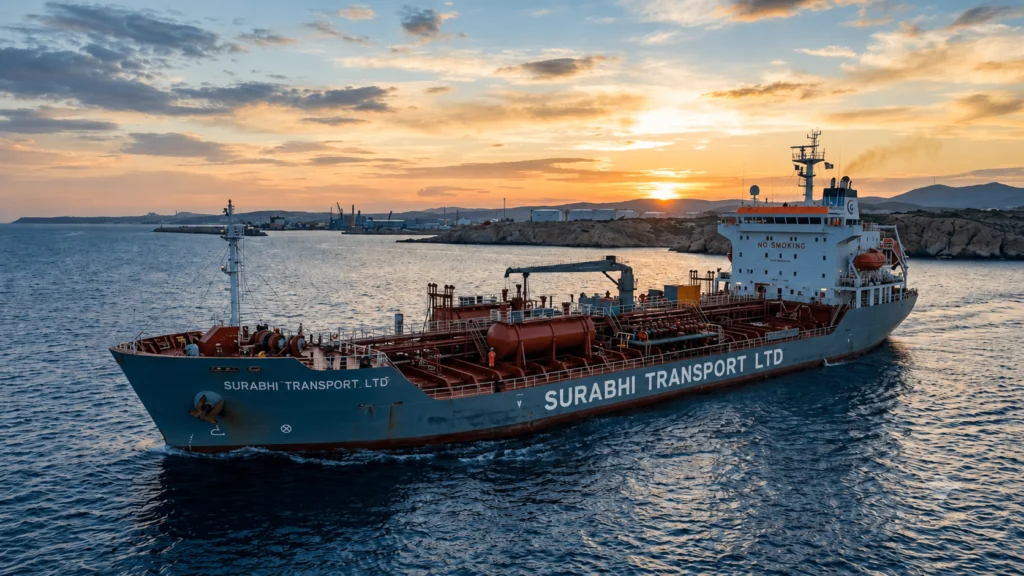
A chemical oil tanker is a specially engineered tank vehicle or vessel built to transport liquid chemicals, petrochemicals, and oil-based industrial substances safely, without contamination, leakage, or chemical reaction with the tank surface. Unlike standard fuel tankers, chemical oil tankers use corrosion-resistant materials like stainless steel (304, 316, 316L grade) and are designed around the specific chemical properties — corrosivity, reactivity, viscosity, and temperature sensitivity — of the cargo they carry.
Chemical oil tankers are used across industries including :
- Petrochemicals and refined oils
- Paints, inks, and coatings
- Pharmaceuticals and agrochemicals
- Adhesives and industrial solvents
- Ethanol and biofuels
Why Chemical Oil Tanker Transport Is Different From Regular Freight ?
Ordinary freight transport moves solid, packaged, or palletized goods. Chemical oil tanker transport moves bulk liquids that can be flammable, corrosive, toxic, or reactive — meaning the margin for error is much smaller. Here’s what sets it apart:
| Factor | Regular Freight | Chemical Oil Tanker Transport |
|---|---|---|
| Cargo State | Solid / Packaged | Bulk Liquid |
| Tank Material | N/A | SS 304/316/316L, Corrosion-Resistant |
| Driver Training | General | Hazmat / Chemical Handling Certified |
| Regulatory Compliance | Standard | CMVR, Hazardous Goods Rules, ISO Protocols |
| Risk of Contamination | Low | High if Tank Isn't Properly Cleaned or Dedicated |
| Emergency Response Need | Minimal | 24×7 Safety Response Required |
Key takeaway: Chemical oil tanker transport isn’t a commodity service — it’s a specialized discipline that demands trained personnel, purpose-built equipment, and rigorous safety systems.
Common Problems Businesses Face With Chemical Transportation
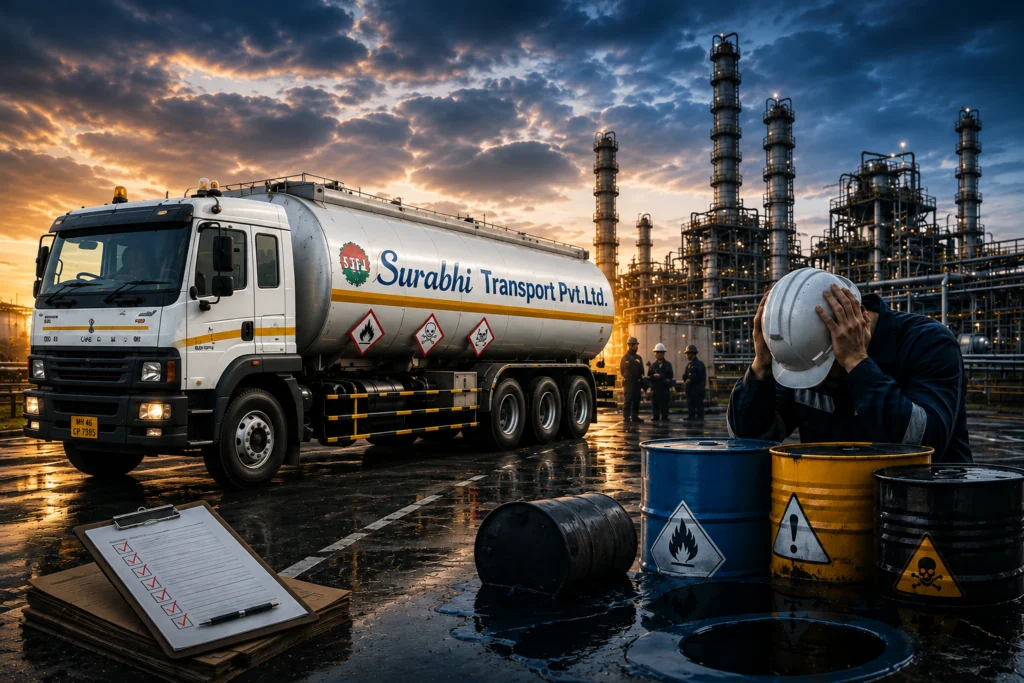
Before we get into solutions, let’s be honest about what typically goes wrong when businesses pick the wrong chemical transporter :
- Cross-contamination from tankers that previously carried incompatible chemicals
- Delayed deliveries that halt production lines
- Non-compliance with hazardous goods regulations, leading to fines or shipment holds
- Poor driver training, increasing accident and spillage risk
- Lack of real-time tracking, leaving businesses blind to shipment status
- Inconsistent fleet maintenance, raising the risk of leaks or breakdowns mid-transit
Every one of these problems is preventable — but only with the right transport partner, the right fleet, and the right safety culture.
How Surabhi Group Solves These Challenges ?
We’ve built our business around solving exactly these pain points for over 25 years. Since Surabhi Transport Pvt. Ltd. was founded in 1997 to serve the logistics needs of companies in paints, pharmaceuticals, inks, agrochemicals, tyres, adhesives, and other chemical industries, safety and reliability have been at the core of everything we do.
Here’s how we approach chemical oil tanker and chemical tanker transport :
1. A Dedicated, Purpose-Built Fleet
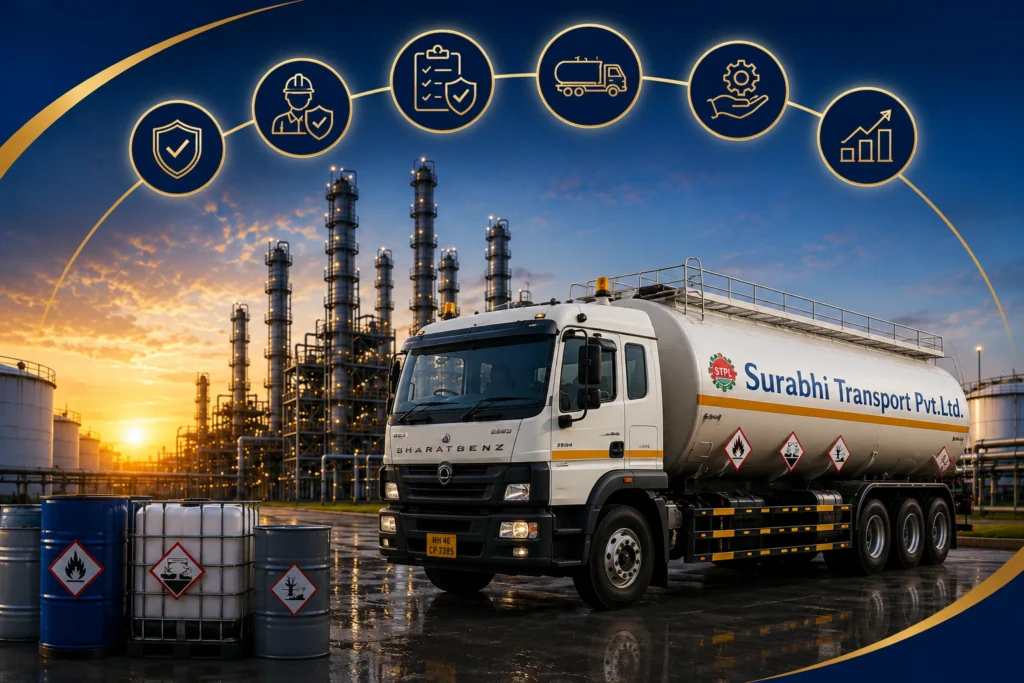
We operate an own fleet of 225+ stainless steel tankers in 21, 25, 30, and 35 MT capacities, built in 304, 316, and 316L grade stainless steel — the same material standards required for high-purity and corrosive chemical transport. Our fleet also includes ISO tank containers for bulk liquid and specialized vessels designed to handle corrosive chemicals safely.
2. Certified Quality Standards
We were the first liquid chemicals transporting company in India to acquire ISO 9001-2008 certification from Bureau Veritas (France), one of the world’s most respected certification bodies. This isn’t a marketing claim — it reflects a documented, audited quality management system that governs how we handle, load, transport, and unload every shipment.
3. Trained, Well-Supported Drivers
We’re the only transporter in this business built around a genuinely competent driver workforce — offering fair salaries, road expenses, and incentives to our drivers and khalasis (helpers) specifically to discourage pilferage and encourage responsible handling. A well-supported driver is a safer, more attentive driver.
4. Rigorous Safety Protocols
Safety isn’t a checkbox for us — it’s a daily discipline. Our drivers go through structured training programs for handling hazardous materials, and our fleet carries advanced monitoring and safety features. We also provide a detailed checklist for unloading tankers, along with any special handling guidance a client requires, to eliminate ambiguity at the point of delivery.
5. Pan-India Reach
We serve key industrial hubs across India, including:
- Maharashtra — Mumbai
- Gujarat — Bharuch, Hazira, Dahej, Kandla, Jamnagar, Vadodara
- Kerala — Kochi
- Karnataka — Mangalore
- Tamil Nadu — Chennai
This network means we can move your chemical shipment from source to destination without gaps in coverage, coordination, or accountability.
6. 24×7 Emergency Support
Chemicals don’t wait for business hours, and neither do we. Our support infrastructure ensures the fleet stays operational, drivers and cleaners work in a safe environment, and emergency response is available around the clock.
Step-by-Step: How Chemical Oil Tanker Transport Works With Us ?
- Requirement Assessment — We understand your chemical type, quantity, origin, and destination to match the right tanker (SS grade, capacity, ISO tank vs. standard)
- Fleet Assignment — A dedicated, appropriately certified tanker and trained driver are assigned based on your cargo’s specific handling needs.
- Loading & Documentation — Loading follows strict protocol with all regulatory and safety documentation completed correctly the first time.
- In-Transit Monitoring — Shipments are tracked and monitored for safety and schedule adherence throughout the journey.
- Safe Unloading — We provide a checklist and any special guidance requested by the client to ensure a smooth, compliant unloading process.
- 24×7 Support — Our emergency and safety response team stays available for the full duration of transit.
Benefits of Choosing a Specialized Chemical Transporter
- Reduced risk of contamination, spillage, or non-compliance
- On-time delivery that protects your production schedules
- Documented quality systems (ISO 9001-2008) for audit-ready compliance
- Experienced handling of paints, pharmaceuticals, agrochemicals, adhesives, ethanol, and more
- Pan-India coverage across major industrial corridors
- Trained, incentivized drivers who treat your cargo with the same care we would
- Round-the-clock support for peace of mind
What Does Chemical Oil Tanker Transport Cost ?
Chemical oil tanker transport pricing depends on distance, chemical type, tanker grade required (SS 304 vs. 316L), shipment volume, and regulatory documentation needs. Corrosive or hazardous chemicals typically cost more to transport than non-hazardous liquids due to specialized handling and equipment requirements. For an accurate quote tailored to your shipment, it’s best to speak directly with a transporter who can assess your specific requirements — pricing over the phone or via generic online calculators is rarely reliable for bulk chemical logistics.
Industry Insight: Why the Tank Material Actually Matters
A mistake we see often: businesses assume “a tanker is a tanker.” It isn’t. Stainless steel grade matters enormously in chemical transport. 304-grade stainless steel offers solid general corrosion resistance and works well for many standard chemicals. 316 and 316L grades contain molybdenum, which significantly improves resistance to chlorides and more aggressive corrosive substances — critical for certain agrochemicals, pharmaceutical intermediates, and industrial acids. Using the wrong grade for a highly corrosive chemical can lead to tank degradation, contamination, and — in the worst cases — leaks. This is a detail experienced transporters account for automatically; it’s a detail inexperienced ones often overlook.
Common Mistakes Businesses Make When Choosing a Chemical Transporter
- Choosing solely on price without verifying safety certifications or fleet quality
- Not confirming dedicated tankers (some transporters reuse tankers across incompatible chemicals)
- Skipping driver training verification — untrained drivers are the single biggest risk factor in chemical logistics
- Overlooking geographic coverage gaps, leading to costly last-mile handoffs
- Ignoring emergency response capability until it’s too late
Conclusion : Choose a Chemical Oil Tanker Partner You Can Actually Trust
Chemical oil tanker transport isn’t an area where you can afford to compromise. The right partner protects your cargo, your compliance record, your production timelines, and — most importantly — the safety of everyone involved in the process.
With over 25 years in the business, an ISO 9001-2008 certified process (the first among liquid chemical transporters in India to hold it), a dedicated fleet of 225+ stainless steel tankers, trained and well-supported drivers, and Pan-India coverage across Maharashtra, Gujarat, Kerala, Karnataka, and Tamil Nadu, Surabhi Group has built its reputation on being the transporter businesses call when the cargo genuinely matters.
Ready to move your next chemical shipment safely and on time? Contact Surabhi Group today for a personalized quote, or call us directly at +91-22-4200-9000.
A chemical oil tanker is used to transport bulk liquid chemicals, petrochemicals, oils, and industrial liquids safely between manufacturing plants, ports, and distribution points, while preventing contamination, leakage, or chemical reaction with the tank material.
Chemical tankers are built with corrosion-resistant materials (like SS 316L) to handle reactive or corrosive substances, whereas standard fuel tankers are designed primarily for petroleum products and don't require the same material specifications.
Paints, pharmaceuticals, inks, agrochemicals, tyres, adhesives, petrochemicals, and ethanol/biofuel producers are among the largest users of dedicated chemical transportation services in India.
Yes. ISO 9001 certification confirms that a transporter follows a documented, audited quality management system — covering handling, loading, safety protocols, and compliance — rather than relying on informal or inconsistent practices.
It depends on the chemical. SS 304 suits many standard chemicals, while SS 316 and 316L are preferred for more corrosive or chloride-sensitive substances due to their added molybdenum content, which improves corrosion resistance.
Ask directly about their hazmat/chemical handling training programs, safety certifications, and whether drivers receive fair compensation and incentives — well-supported drivers tend to be more careful, attentive, and less likely to cut corners.
Most established chemical transporters, including Surabhi Group, provide shipment monitoring and status updates so businesses aren't left guessing about their cargo's location or estimated delivery.
Surabhi Group serves Mumbai (Maharashtra); Bharuch, Hazira, Dahej, Kandla, Jamnagar, and Vadodara (Gujarat); Kochi (Kerala); Mangalore (Karnataka); and Chennai (Tamil Nadu), with a Pan-India operational network.
Cost varies based on distance, chemical type, required tank grade, shipment volume, and compliance documentation. Hazardous or corrosive chemicals generally cost more due to specialized handling requirements — request a custom quote for accurate pricing.
You can contact a specialized chemical transporter directly with your chemical type, quantity, and route details. Surabhi Group can be reached at +91-22-4200-9000 or operations@surabhitransport.com for a tailored quote.